Oct 6, 2026
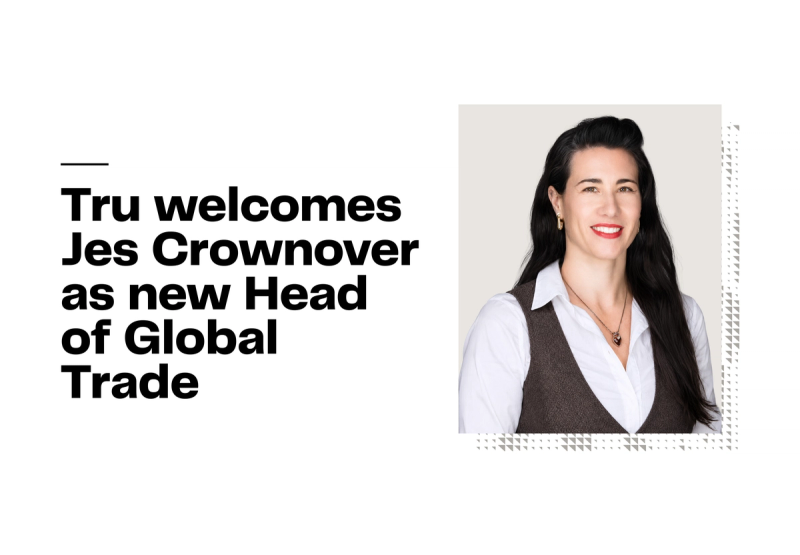
Press Release: Jes Crownover Joins Tru as Head of Global Trade
Former FedEx and Livingston executive joins Tru to build the trade infrastructure for the future of imports.
Event
OCT. 27th 12:00 PM ET
By Tru Identity · Nov 22, 2024
Consumer packaged goods (CPG) expert Steve Candland has worked with a variety of brands, including candies, cheese dips, ginger beers, non-alcoholic beers, and more.
These brands have sold everywhere from farmers’ markets to the largest retail stores on the planet.
I sat down with Steve to discuss his experiences, focusing on key lessons that smaller, up-and-coming CPG brands need to know to succeed.
Steve got his start in CPG while living in Australia where he developed a palate for ginger beer.
Steve described ginger beer as a purer form of ginger ale. “If ginger ale is like Sprite, then ginger beer is like fresh-squeezed lemonade,” he explained.
When Steve later moved back to Utah after living in Australia, he wanted to have a great ginger beer, but there weren’t any around. So, naturally, he made his own.
Traveler’s Soda was born. He didn’t stick to just ginger beer; he also made root beer and apple beer.
He was self-manufacturing and selling to a few mom-and-pop shops and at farmers’ markets. Traction was building, so he looked into scaling this up into a bigger business.
This is when Steve stressed the difficulty of scaling one of these brands successfully.
“It takes at least a million dollars to have a product that is professionally formulated, packaged, and can be manufactured at scale. And I didn’t have that.” Steve ultimately made the difficult decision to wind down.
After gaining valuable insights after building Traveler's Soda, Steve began fractional operational work with other CPG brands, assisting with sourcing, vendor management, 3PL coordination, and manufacturing. He acted as a part-time supply chain manager for multiple brands at various stages of growth.
One experience, when a small brand got an opportunity to get on the shelves at Walmart, was particularly surprising.
This was a huge opportunity to gain brand recognition and potentially make a lot of money. However, the brand is now out of business, and part of it was due to the Walmart deal.
“I don’t think Walmart is good for small CPG businesses,” Steve said. “Walmart holds all the power. They'll make you sell it at a price point lower than what you’re comfortable with, and even if it sells out, next year they'll ask you to sell it even cheaper.”
“Many small CPG brands are in the premium category. It’s not the cheapest stuff. They have higher quality ingredients and are a bit more expensive off the shelf.”
Most people tend to go to Walmart for something cheap or that is unavailable elsewhere.
“They have some organic stuff, but if I want a healthy niche thing, I go to the co-op down the street,” Steve stated. “I don’t think Walmart is good for brands until they’re at $20 million or more in revenue.”
For this brand, getting into a big-box store like Walmart seemed like the opportunity of a lifetime. So they agreed to produce significantly more than ever before in a single production run to meet the contract’s requirements.
Before agreeing to this, the brand wisely checked with their contract manufacturer, who said they could produce the required amount of product. However, they would need to purchase some new machinery to do so, which they agreed to do, as this was a big opportunity for the manufacturer as well.
With the manufacturer on board, the brand struck the deal with Walmart.
Issues began as soon as production started. Unfortunately, the manufacturer didn't do a test run with their newly purchased equipment and it did not work as expected.
Since they were on a tight deadline, to help meet Walmart’s demands, the manufacturer packed goods by hand, causing significant delays. To keep up, they hired temporary workers and ran three shifts daily, drastically increasing costs and overrunning the budget.
The brand ended up having to chip in to cover the costs of the additional hires and hours billed as they were scraping to meet the obligations of the contract.
They ended up fulfilling the order for Walmart, but due to the extreme overrun in costs, they took a massive financial loss. The company ultimately went under.
In hindsight, a better strategy for this brand would have been to say they couldn’t fulfill Walmart’s request and to come back when they could support that size of an order.
While Walmart isn't even an option for all CPG brands, there are still fundamental strategies budding companies can follow in order to grow to that type of level.
For small brands to scale, most people would say you have to have a good product, which is true to an extent. However, this isn’t what scales or builds a business.
“If you walk down to Whole Foods, there is probably a bunch of stuff on the shelves that just isn’t that good,” Steve explained. “Some not-good stuff sells.”
Steve uses a simple framework to determine if your product is good enough to start selling. He calls it the Uncle Joe Test.
To understand this test, you first need to understand who Uncle Joe is.
Your Uncle Joe is not going to be your customer. He only drinks Coca-Cola and does not want to try kombucha. He is someone that would never seek out or buy your product. He is going to give it to you straight.
"If Uncle Joe tries your product and says, “Yuck,” you should go back to the drawing board, but if he can have your product and isn’t grossed out, you have a shot."
Steve mentioned this applies to niche products too. "You still need to appeal to a broader market in order to scale, even if you niche down to people who really only care about functionality over taste."
The biggest things, however, that small brands need to keep in mind is simply how much time and money it takes to grow into a successful business.
When Steve is meeting with a new brand, he asks, “Do you want to sell at the farmer’s market, or do you want to scale? If you want to sell at the farmers’ market, great, but if you want to scale, you need access to $1 million.”
The lack of access to this amount of capital was why Steve had to wind down Traveler’s Soda in the first place.
“You need this to hit exit velocity. You can get this from yourself, family, credit cards, anywhere, but this applies to any given product you see on the shelf.”
While there is a substantial initial investment to get a quality product with good packaging that can be produced at scale, that really is just the beginning of the journey, Steve explained:
“Retailers do what’s called a reset, where they ‘reset’ the inventory they have in a certain category. So if you’re new in a category, they may not do a reset until, say, Q3 next year. Today, they say they like it and they want to buy it, but they won’t do anything until that reset.”
So, while you've gotten a verbal confirmation that a large retailer is on board for a big order, there may be a long lag time until you actually get on the shelves.
It isn’t just getting your product into the store that can take longer than expected, but getting paid can be a more lengthy process than anticipated as well. Steve gave an example of what it might look like getting your product into Target:
“Say Target comes to you and they want your product in their stores. Let’s assume you can actually get the product to them. There’s a ton of paperwork, getting the product ready, systems to integrate, but then there’s a ton more time on the backend for you to get paid. Big companies like this have payment terms most times. This could be 30, 60, 90 days.”
“You finally get onto shelves in Target, your product sells out, and they put in another order. Then it happens again. And again. You could be three purchase orders deep before you get paid for your first one if you’re on net-90 terms. So it would take you three, six, nine-plus months to get set up, and could be another few months to even get paid.”
That first check from the retailer could be a year out from the time terms were agreed to. For smaller brands operating on thin margins, this might not be feasible. It’s important to budget out not just the dollars, but the amount of time you can sustain yourself before agreeing to enter into a contract with a large retailer like this.
Looking forward to where things are trending in the CPG space, Steve explained, “It’s hard to predict consumer behavior. It takes such a long period of time for any change to be noticeable, and it encapsulates so many behaviors.”
“Today, the average consumer is more aware and concerned with what they’re consuming and how they’re consuming it. There are a lot more better-for-you brands in every category now. People want to know where ingredients come from. That it’s ethically sourced. They want more organic. I think that will continue.”
But don’t worry, this doesn't mean things like Oreos and Pepsi are going anywhere.
“Look, I enjoy soda as much as anyone. I don’t think people will stop buying those. But more people are moving towards a balance of what they consume.”
In any business, the right partners can make or break you when challenges arise—and challenges are inevitable.
“You need to know the people you’re working with are trying to help, can communicate, aren’t hot heads, and will say, ‘Yes, Steve, let’s figure this out together,’” Steve explained.
“If your PO arrives and the pallet is broken and your product went bad, a good 3PL will send you photos to show that it was in good condition when it left the facility.
The CPG industry is amazing and full of great people doing cool things. It takes the right mindset to be successful, but having the right partners, right product, enough resources, and a clear path forward are all things you need to build a successful CPG business.
Steve Candland offer's consulting services to a wide variety of CPG brands at various stages of their growth. To learn more about Steve, check him out on LinkedIn. To speak with Steve directly, book time with him here.
This story was written by Henry Carey, Co-Founder and Head of Partnerships at Tru Identity.
If you have experience that is valuable for up-and-coming CPG brands, get in touch with Henry here to share your story.
Tru Identity is a trade compliance automation platform for importers and logistics service providers, delivering tailored guidance based on your unique situation and tools to make it easy to stay compliant.
To learn more about Tru Identity, check out our blog here.
To speak with someone from our team, book a call here.
Oct 6, 2026
Press Release: Jes Crownover Joins Tru as Head of Global Trade
Former FedEx and Livingston executive joins Tru to build the trade infrastructure for the future of imports.
Oct 6, 2026
Q&A with Jes Crownover: Why I Joined Tru
Jes Crownover discusses why trade compliance's future belongs to those who combine expertise with technology.
Sep 18, 2026
The CF-28 That Arrives 14 Months Later: Reconstructing Rationale vs. Exporting It
Staying current on tariff changes helps you file today. Rule-version provenance is what lets you prove what you filed 14 months ago, and it's the difference between a CF-28 taking an afternoon or two weeks.

©2026 Tru Identity, Inc. All rights reserved.