The entry is where the whole problem shows up
CBP sees the declaration and the history around it. CBP does not see the supplier that changed a description at the last minute, the person who did not answer an email, or the internal conversation where someone decided that an entry line was probably the same product as last time. Instead, what CBP can see is whether similar products are being entered consistently, whether the valuation makes sense, whether the same issues keep appearing, and whether an importer’s filings line up with its own history.
That is why so much compliance work becomes post-entry work. Issues may be resolved in PSCs, but the underlying source of the problem has not changed, so it appears again with another product, another supplier, or another broker.
This is the kind of pattern that is hard for an individual entry writer to see while managing day-to-day volume, but it is exactly the kind of pattern that becomes visible when somebody looks across the entire entry history.
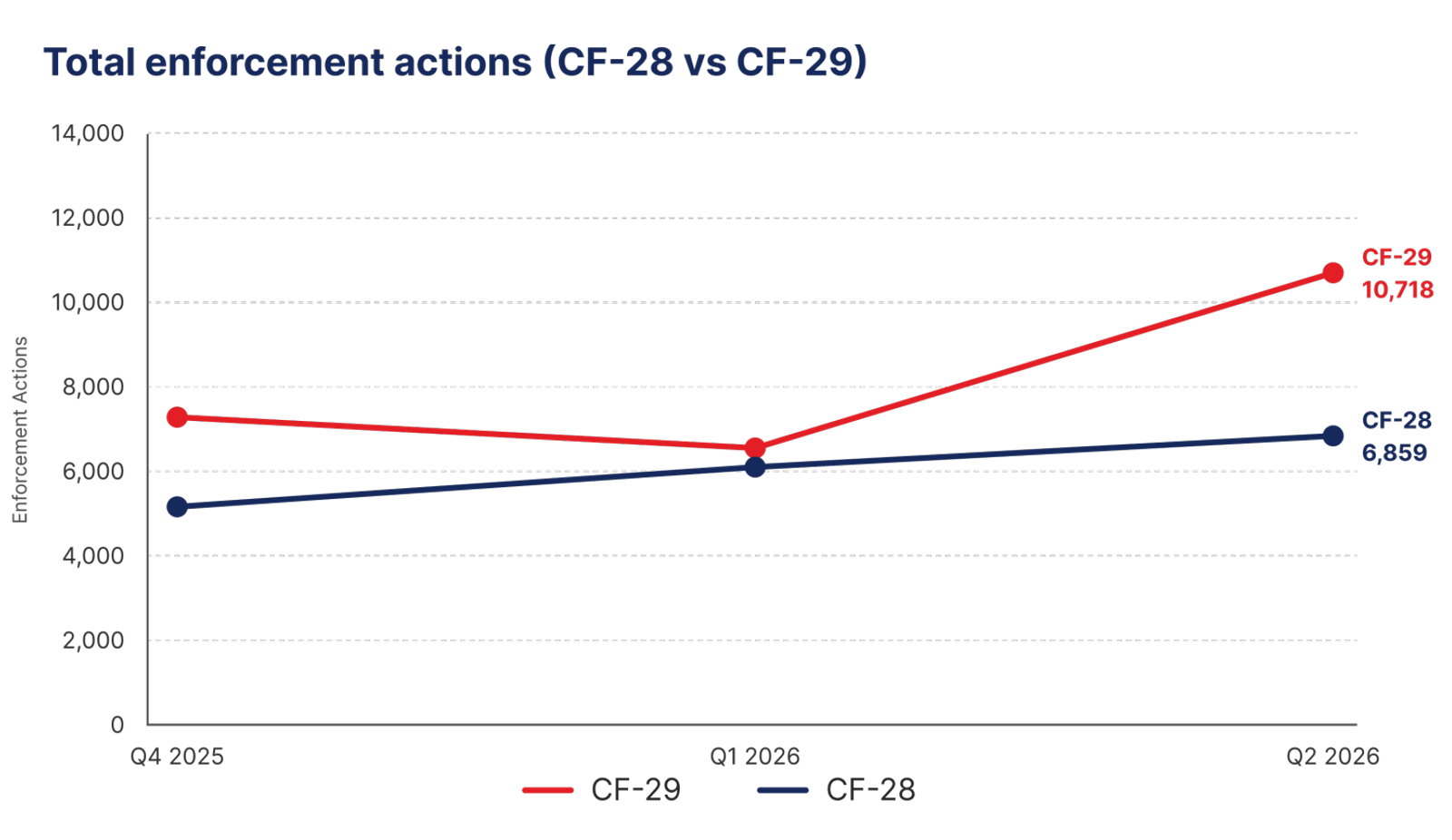
This is the level of intelligence that CBP is now bringing to the table for enforcement, largely due to Executive Order 14411, “Strengthening Customs Enforcement.”
The entry fee is not the full cost
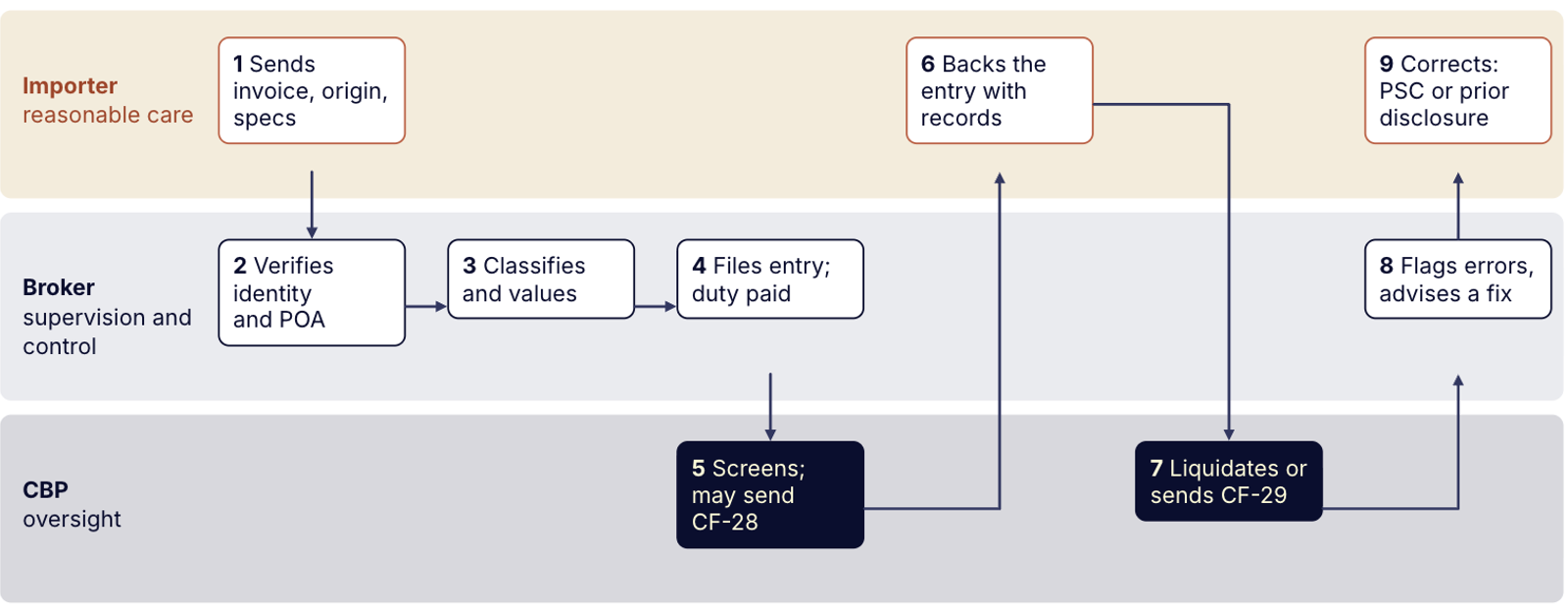
Importers should care about what an entry costs, but the filing fee alone does not tell them much about the total cost of the relationship. It does not tell them whether their broker is seeing the same classification issue repeatedly, whether the product data is getting worse as it moves through the supply chain, or whether the business will be able to explain a decision when a CF-28 or CF-29 arrives months later. That is why the idea of a “cheap entry” is becoming harder to defend. A customs broker may be able to process and file the entry at a low price, but that is different from helping the importer understand its data, improve the process behind the entry, identify recurring risks, and avoid work that will otherwise come back later as a correction or enforcement issue. Importers are beginning to look at this more closely because the combined cost of tariffs, post-entry work, and being wrong has become too significant to ignore.
There is a commercial challenge here for brokerages. Customers expect speed and low prices, while also expecting help with tariff changes, classifications, refund opportunities, product data, audits, and downstream questions from CBP.
Those expectations are not going away, and they cannot be met just by asking entry writers to work faster or remember more information. The process itself has to improve.
What can I do about it?
There are three audits you can do right now.
The first place to start is accuracy. An importer and broker should be able to look at the classification, description, valuation, PGA information, and trade-remedy treatment on an entry and connect each part back to the actual product and supporting information. That does not require a full investigation of every line every time, but it does require enough structure that the business can tell the difference between a supported decision and one that merely seemed reasonable at the time.
Consistency is the next issue, and it is often where the more interesting problems appear. A company may have individually defensible entries and product data that looks completely innocuous on the micro level but is actually inconsistent across its product catalog, particularly when it has multiple suppliers, multiple brokers, or product descriptions that change from shipment to shipment. Looking across that data can show where the same product is being treated differently, where a supplier is consistently creating poor information, or where a broker is relying on an assumption that does not hold up elsewhere in the business.
The third angle is opportunity. Once the data is accurate and consistent, importers can begin to see whether they are overpaying duties or missing refund opportunities. This is the part of compliance work that often gets missed when the entire organization is focused on fixing yesterday’s entry. Better data does not only reduce exposure; it also gives the business a clearer view of where money is being left on the table.
Where this is heading
CBP has a $3.5B enforcement budget, a long history of entry data, and a much clearer sense of where it wants to focus than it did a few years ago. Importers and brokerages do not need to replicate CBP’s program, but they do need to understand the information behind their own entries well enough to find the obvious gaps before someone else does.
For importers, that means getting product data into a form that can actually be used for customs decisions rather than leaving it spread across vendors, purchase orders, invoices, and internal systems. For brokers, it means building processes that do more than turn documents into entries; they need to help identify uncertainty, maintain consistency, and show the basis for the decisions being made. The importer still owns the data, and the broker still owns the process, but neither obligation works very well without the other.